
Orlando Canoe Rentals: Best Places to Canoe in Central Florida
Canoeing in Central Florida is one of those activities that delivers far more than people expect. The region's spring-fed rivers, blackwater creeks, and connected lake systems give paddlers access to wildlife, scenery, and water clarity that most travelers associate with much more remote parts of the country, all within an easy drive of downtown Orlando.
Whether you're a family looking for a low-stress afternoon on the water, a couple wanting to share a quiet paddle, or a fishing enthusiast scouting new spots, a canoe is often the right boat for the job.
The challenge is figuring out where to go, what to expect, and how to actually book a rental that fits what you're looking for. Orlando's paddle sports scene includes dozens of outfitters, launch points, and waterways, and the differences between them matter more than they appear at first glance.
A spot that's perfect for a beginner family trip is rarely the same one experienced paddlers head to for a quiet, immersive day on the water.
The right canoe trip starts with the right information: where the best spots are, what rentals actually cost, what's included, and when conditions favor paddling. With that dialed in, choosing a destination and booking a rental becomes the easy part.
Why Canoeing Is Perfect for Orlando's Rivers and Springs
Central Florida's waterways were practically designed for canoes. The region sits on top of the Floridan Aquifer, which feeds dozens of clear, spring-fed rivers that flow at slow, predictable speeds, exactly the conditions where canoes outperform kayaks and paddleboards.
Wide, flat-water rivers with minimal current let two paddlers move in sync without fighting the water, and the open hull design makes it easy to bring kids, gear, coolers, or a dog along for the ride.
Canoes also handle Florida's shallow waterways better than most people expect. Spring runs like the Wekiva River, Rock Springs Run, and Juniper Run have sandy bottoms with depths that vary from a few inches to several feet within the same paddle.
A canoe's flat hull glides over shallow stretches that would scrape a kayak's keel, and the higher seating position gives paddlers a better view of manatees, turtles, and the occasional alligator sunning on the bank.
What makes canoeing uniquely suited to this region, though, is the social factor. Most Central Florida paddle trips run two to four hours, long enough that having a tandem partner to share the work matters.
Bow and stern paddlers naturally develop a rhythm, conversation flows easier than it does between two separate kayaks, and gear stays accessible in the open hull.
For families with young kids who can't paddle their own boat yet, or couples who want to actually talk to each other on the water, a canoe solves a problem that kayaks and paddleboards can't.
How many freshwater springs does Florida have?
Florida has more than 1,000 freshwater springs, representing what may be the largest concentration of freshwater springs on Earth, according to the Florida Department of Environmental Protection.
Most of the state's major paddling springs are located in north and central Florida, with several premier canoeing destinations within a 90-minute drive of Orlando.
The Wekiva River, Rock Springs Run, and Juniper Springs are among the spring-fed waterways that make Central Florida one of the country's strongest regions for canoeing.
The 8 Best Places to Canoe in Orlando (Ranked by Scenery & Difficulty)
Central Florida gives canoeists a deep menu of options, from spring-fed runs that feel like jungle expeditions to wide, slow rivers built for relaxed family paddles. The list below ranks the best canoeing spots within roughly 90 minutes of Orlando based on scenery, accessibility, and how well each location suits canoes specifically.
1. Wekiva River
The clear winner for Orlando-area canoeing. The Wekiva is a federally designated National Wild and Scenic River, with crystal water, abundant wildlife, and minimal current.
It accommodates every skill level, has multiple launch points, and offers everything from short out-and-backs to extended paddles connecting to the St. Johns River. Paddleboard Orlando operates here and rents canoes directly.
2. Rock Springs Run
A narrower, more jungle-like cousin of the Wekiva. Rock Springs Run flows about 9 miles through Rock Springs Run State Reserve before merging with the Wekiva.
The current runs faster, the canopy is denser, and the wildlife is concentrated. Best for paddlers who want a one-way downstream experience with a shuttle pickup.
3. Juniper Springs Run
About 75 minutes northwest of Orlando inside Ocala National Forest. A 7-mile run through cypress swamp and palm hammocks, considered one of Florida's most scenic paddles.
The narrow, twisting channel demands real maneuvering, so this is better for paddlers with at least a couple of trips behind them.
4. Silver Springs / Silver River
The headspring for the Silver River discharges some of the highest spring flow in Florida. Glass-clear water, easy current, and a strong chance of seeing wild rhesus monkeys along the banks.
Wide enough for stress-free tandem paddling, it is popular enough that weekends get crowded.
5. Alexander Springs Creek
Another Ocala National Forest gem. The creek flows from a first-magnitude spring and offers calm, beginner-friendly water with sandy bottoms and frequent wildlife sightings.
Less crowded than Juniper or Silver, it is a good day-trip option if you want something different from the Wekiva system.
6. Shingle Creek
The technical headwaters of the Everglades, just south of Orlando in Kissimmee. The Shingle Creek Paddling Trail runs through a 1,000-acre regional park past old cypress and Spanish moss.
Easy, flat water with a real "Old Florida" feel, and convenient for anyone staying near the theme park corridor.
7. Econlockhatchee River
The "Econ" is a blackwater river east of Orlando with a more wilderness feel than the spring runs.
Tannin-stained water, narrow passages, and noticeably fewer crowds make it a unique paddling experience. Water levels swing significantly with rainfall, so check conditions before launching.
8. Lake Louisa
Inside Lake Louisa State Park near Clermont. A series of connected lakes with calm, open water that's ideal for first-time canoeists, kids, or anyone who wants to fish from the boat.
Less dramatic than the spring runs, but easier to access and more forgiving for novices.
Wekiva River Canoe Rentals: Top Canoeing Routes from Paddleboard Orlando
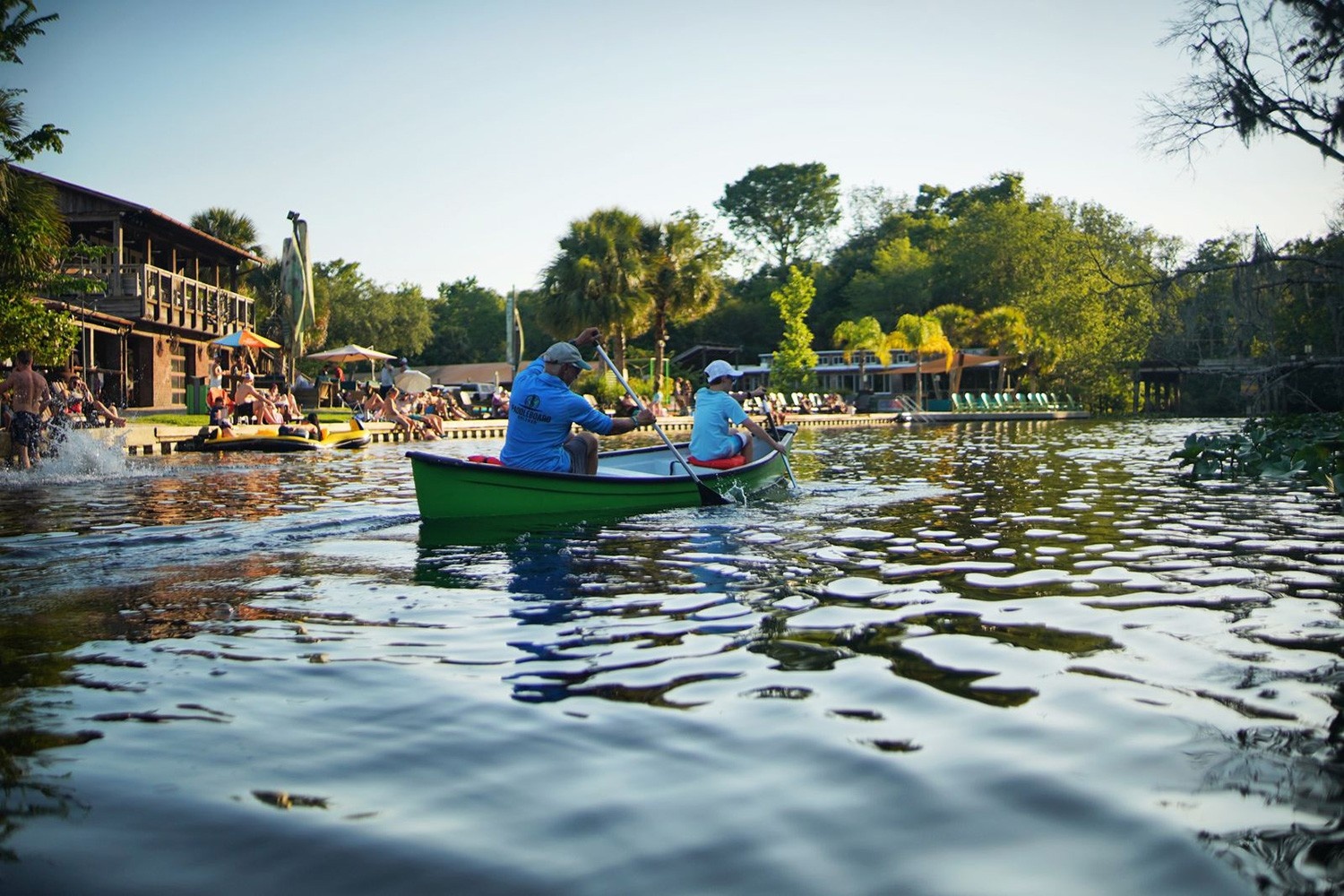
Paddleboard Orlando operates directly on the Wekiva River out of Wekiva Island, which puts paddlers in the middle of the system rather than at one of the spring-headed launch points.
That location matters because it opens up routes in two directions: upstream toward the headwaters and confluence with Rock Springs Run, or downstream toward the St. Johns River. Most renters do an out-and-back paddle and choose their direction based on what they want to see.
The standard upstream route runs from Wekiva Island toward the confluence where Rock Springs Run meets the Wekiva. The paddle takes about 90 minutes round-trip at a relaxed pace and stays in calm, sheltered water the whole way.
This is the route most families and first-time canoeists pick. Cypress trees lean over the channel, turtles line every fallen log, and the water runs clear enough to see fish weaving below the canoe.
Paddlers who want more distance can continue up Rock Springs Run for another mile or two before turning around, which adds time but also adds the run's signature jungle-canopy feel.
The downstream route from Wekiva Island heads toward Blackwater Creek and the broader Lower Wekiva Preserve area. Current is gentle but present, so the paddle out is easier than the paddle back.
This direction tends to be quieter, with fewer rental boats and a more remote feel. Wildlife sightings here lean toward larger birds, river otters, and the occasional manatee in cooler months. Plan on 3 to 4 hours for a comfortable round-trip.
For paddlers who want to stretch a half-day rental into a full experience, the after-4 PM rate makes a sunset paddle realistic. The light changes the river completely. Birds come down to the water, the canopy reflections deepen, and the heat eases off.
Bringing a small cooler and snacks works well in a canoe since the open hull leaves room for a dry bag and gear without crowding paddlers.
Whatever route or time you choose, Paddleboard Orlando provides the gear and basic guidance on water conditions at the time of rental.
How Much Do Canoe Rentals Cost in Orlando?
Canoe rental pricing in the Orlando area generally falls into two categories: hourly rentals and day rentals.
Most outfitters in Central Florida charge between $35 and $75 for a full-day canoe rental, with hourly rates at smaller parks ranging from $15 to $25. Pricing depends on whether the outfitter operates on a private launch versus a state park, whether shuttle service is included, and what equipment comes with the rental.
Paddleboard Orlando keeps its canoe pricing simple. A canoe rental costs $53 before 4 PM and drops to $40 after 4 PM, which makes the late-afternoon and sunset window the most affordable way to get on the river.
Both rates include the canoe, paddles, and required safety gear, and renters launch directly from Wekiva Island with no additional access fee. The after-4 PM rate is worth considering for paddlers who don't need a full day on the water, since late afternoon is the best time of day for wildlife sightings and photography.
For paddlers who own their own canoe, Wekiva Island offers launch-only access at a separate rate. Bringing your own canoe costs $10 on weekdays and $20 on weekends, and includes parking, launch access, and access to Wekiva Island's facilities for the day.
This option appeals to local paddlers with their own gear who want a reliable, well-maintained launch point on the Wekiva without dealing with the logistics of state park parking or hauling boats to harder-to-reach put-ins.
The pricing structure makes Paddleboard Orlando a flexible option, whether you're renting for the first time, planning a sunset trip on a budget, or just looking for somewhere convenient to put in your own boat.
Most paddlers find that the rental rate works out to a better value than expected once you factor in the included gear, the launch location, and the access to the rest of Wekiva Island after the paddle.
Beginner Canoe Routes: Easy Family-Friendly Canoeing in Central Florida
Beginner-friendly canoeing comes down to three things: calm water, easy access, and a forgiving environment if something goes sideways. Central Florida happens to have all three in abundance.
The region's spring-fed rivers and lakes give first-time paddlers and families with kids plenty of options that don't require any real skill to enjoy.
The Wekiva River from Wekiva Island is the easiest entry point in the area. The water is calm and shallow, the launch is straightforward, and the upstream route toward the Rock Springs Run confluence stays sheltered the entire way.
Kids can sit in the middle of the canoe between two paddling adults, gear stays dry in the open hull, and there's no real chance of getting swept downstream or into trouble. Most first-time renters paddle for 60 to 90 minutes upstream, then drift back with the gentle current.
Lake Louisa State Park near Clermont offers a different kind of beginner experience. Instead of a river, paddlers explore a chain of connected lakes with wide, open water and zero current.
This setup works particularly well for families with very young kids or anyone nervous about narrow channels and overhanging branches. Wind can pick up on open water in the afternoon, so morning paddles tend to be the best call. The park also has shoreline picnic areas, which make it easy to break up the day.
For families who want a slightly more adventurous feel without the difficulty, Shingle Creek's Steffee Landing section in Kissimmee delivers an easy paddle through a cypress-lined corridor that feels far more remote than its location suggests.
The water stays calm, the trail is well-marked, and the park itself has restrooms, picnic tables, and other amenities that make a half-day paddle with kids genuinely manageable.
Three things help any beginner trip go smoothly: communicate between bow and stern paddlers about which side you're paddling on, keep paddle strokes short and steady rather than aggressive, and don't fight the boat if it drifts a little off course.
A canoe self-corrects more than people expect. Most first-timers feel comfortable within the first 15 minutes on the water, and within an hour, they're paddling like they've been doing it for years.
Advanced Canoe Routes: Multi-Day Camping and Wilderness Trips
Experienced canoeists in Central Florida have access to some of the best multi-day paddle routes in the Southeast.
The Wekiva River system connects to a network of public lands, primitive campsites, and the broader St. Johns River system that allows for trips ranging from a single overnight to a week or more of self-supported paddling.
These routes require real skill, planning, and the right gear, but the payoff is genuine wilderness solitude within an hour of Orlando.
The classic advanced route runs from the upper Wekiva River system down to the St. Johns River. Paddlers can camp at primitive sites along Rock Springs Run and the Lower Wekiva River, with reservations made through the state park system.
These campsites are accessible only by canoe or kayak and require campers to pack in everything they need, including water and firewood. The trip typically takes two to three days, depending on pace and how much exploration paddlers want to do along the way.
Ocala National Forest offers another set of advanced options about an hour and a half north of Orlando. Multi-day paddles along the Ocklawaha River or extended trips through the spring-fed creek systems put paddlers in genuinely remote territory with limited bailout points.
Black bear, wild hogs, and the occasional snake are part of the experience, and weather can change conditions quickly. These trips suit paddlers with previous overnight canoe experience and solid navigation skills.
For paddlers ready to take on multi-day trips, the planning process matters as much as the paddling itself. Permits, campsite reservations, gear lists, water resupply points, and weather monitoring all factor into a successful trip.
Most advanced paddlers in Central Florida start by doing day trips to scout sections, then build up to overnights before attempting longer routes.
Paddleboard Orlando focuses on day rentals out of Wekiva Island rather than multi-day expedition outfitting, but the Wekiva system itself remains the natural starting point for paddlers building toward longer wilderness trips.
What's Included in Orlando Canoe Rentals: Equipment, Shuttles & Safety Gear
Most Orlando-area canoe rentals include the basics needed to get on the water safely, though specifics vary by outfitter.
Standard inclusions are the canoe itself, paddles for each person, and Coast Guard-approved life vests sized for adults and kids. Some outfitters add dry bags, cushions, or basic instruction at no extra charge, while others charge separately for these add-ons. Reading the fine print before booking saves headaches at the launch.
Paddleboard Orlando's canoe rental includes the boat, paddles, and required safety gear at the rental rate. Renters launch directly from Wekiva Island, which means no separate park entry fee, no shuttle scheduling, and no hauling gear from a parking lot to a remote put-in.
The launch sits steps from the rental counter, and the staff handles loading the canoe into the water. For paddlers bringing their own gear, the launch-only access fee covers parking and use of the facilities for the day.
Shuttle service works differently for canoeing than it does for kayaking on Central Florida's spring runs. Out-and-back paddles from Wekiva Island don't require a shuttle since paddlers return to their starting point.
One-way trips, like the Rock Springs Run downstream paddle from Kings Landing to Wekiva Island, do require shuttle coordination, and those trips are typically booked through the launch-point outfitter rather than the take-out point. Most renters at Wekiva Island stick with out-and-back routes since the river is calm enough to make upstream paddling easy.
Beyond the standard rental gear, paddlers should bring a few items the outfitter doesn't supply: water, sun protection, a hat, water shoes or sandals with straps, and a small dry bag for phones and keys.
Sunscreen matters more than people expect on the Wekiva since the canopy provides only partial shade through most of the trip. A small cooler with snacks fits easily in a canoe's open hull, which is one of the practical advantages canoes have over kayaks.
Most rentals last two to four hours, so packing for that window keeps things simple.
Are life jackets required for canoeing in Florida?
Yes. Federal regulations require at least one U.S. Coast Guard-approved life jacket for every person on board any canoe, regardless of vessel length, and reputable outfitters provide them as part of every rental.
In Florida, children under six must wear their life jackets at all times while underway. The Coast Guard estimates that life jackets could prevent the majority of paddling-related drownings, and most outfitters strongly recommend wearing them throughout the trip rather than just storing them in the boat.
Best Seasons for Canoeing in Orlando: Weather and Water Conditions
Central Florida's climate makes canoeing a year-round activity, but each season brings its own conditions.
The peak window runs from October through April, when daytime temperatures sit comfortably in the 60s to 80s, humidity drops, and afternoon thunderstorms disappear from the forecast. These months also bring the clearest water, since seasonal rainfall patterns reduce the tannin runoff that darkens rivers like the Econlockhatchee during summer.
Spring-fed rivers like the Wekiva, Rock Springs Run, and Juniper Springs Run hold a remarkable advantage during any season. The water temperature stays around 72 degrees year-round, regardless of air temperature.
This means winter paddles in 60-degree weather feel pleasant rather than cold, and summer paddles offer a noticeably cooler experience than swimming in a lake or pool. The constant temperature also keeps wildlife active throughout the year, so paddlers see manatees, otters, turtles, and birds during every season, just in different concentrations.
Summer canoeing in Orlando works best in the morning. Afternoon thunderstorms roll in almost daily from June through September, typically between 2 and 5 PM, and getting caught on the water in lightning is a real safety risk.
Morning paddles starting between 8 and 10 AM avoid both the heat and the storms, and the wildlife tends to be more active before the day warms up. Sunset paddles after the storms pass can also work in summer, but checking radar before launching is non-negotiable.
Manatee season runs roughly from November through March, when warmer spring-fed waters draw the animals in from cooler rivers and bays. Spotting a manatee on the Wekiva is uncommon but possible during these months, and the Lower Wekiva and St. Johns connection sees more sightings.
Florida law protects manatees from harassment, including approaching, touching, or altering their natural behavior, which canoes happen to be well-suited for since paddlers can drift quietly without disturbing the animals.
The combination of cooler air, clearer water, fewer crowds, and active wildlife makes the November-through-March window the strongest stretch of the year for serious canoeing in Central Florida.
What is the water temperature in Florida's spring-fed rivers?
Florida's spring-fed rivers maintain a constant water temperature of 72 degrees Fahrenheit year-round, according to Florida State Parks.
This consistent temperature comes from the underground aquifer that feeds the springs, which stays at the same temperature regardless of season. The result is rivers like the Wekiva, Rock Springs Run, and Juniper Springs that feel refreshingly cool in summer and pleasantly mild in winter, making canoeing comfortable across all four seasons in Central Florida.
Frequently Asked Questions About Orlando Canoe Rentals
Where can I rent a canoe near Orlando?
Paddleboard Orlando rents canoes directly from Wekiva Island on the Wekiva River, about 30 minutes north of downtown Orlando. The location offers calm water, easy launch access, and routes that work for both first-timers and experienced paddlers.
Other Central Florida outfitters operate at Shingle Creek, Lake Louisa, and various Ocala National Forest locations, though access points and included gear vary widely.
Do I need experience to canoe the Wekiva River?
No experience is required. The Wekiva is one of the most beginner-friendly rivers in Florida thanks to its calm, slow-moving water and minimal current.
Most first-time canoeists feel comfortable within the first 15 minutes on the water, and the upstream-and-back route from Wekiva Island removes the navigation challenges that come with one-way trips. Bringing a more experienced paddler in the stern position helps, but plenty of pairs figure it out together their first time.
What's the difference between canoeing and kayaking?
Canoes are open boats designed for two or three paddlers using single-bladed paddles, while kayaks are enclosed or sit-on-top boats designed for one or two paddlers using double-bladed paddles.
Canoes carry more gear and people, sit higher on the water, and work well for groups, families, and pets. Kayaks track straighter and require less coordination between paddlers but offer less capacity.
The choice usually comes down to who you're paddling with and what you want to bring along.
Can I bring my dog in a rental canoe in Orlando?
Dogs are not permitted at Wekiva Island or on Paddleboard Orlando rental canoes. The property and the rental boats are pet-free, so paddlers planning to bring a dog will need to look at other launch points and outfitters in the Central Florida area.
Some other locations and outfitters may allow dogs, but policies vary, so confirm pet rules directly with the outfitter when booking.
How many people fit in a canoe rental?
Standard rental canoes typically seat two to three people, with a weight capacity around 600 to 800 pounds depending on the model.
Two adults plus a small child or a pet is the most common setup. Three full-sized adults can fit but reduce stability and gear space. For larger groups, renting multiple canoes is the standard solution.
Are there overnight canoe camping trips near Orlando?
Yes, primitive canoe-only campsites exist along Rock Springs Run and the Lower Wekiva River, accessible only by paddle and reservable through the Florida State Park system.
Ocala National Forest also offers multi-day paddle camping options about 90 minutes north of Orlando. These trips require self-supported camping skills, gear planning, and reservations made in advance.
Most Orlando outfitters focus on day rentals rather than multi-day expedition outfitting, so paddlers typically rent gear separately or use their own.
Do Orlando canoe rentals provide life jackets?
Yes. U.S. Coast Guard regulations require a properly fitted life jacket for every person on board any canoe, and reputable outfitters provide them as part of every rental.
Most rentals include adult and child sizes. Children under six are required to wear their life jackets at all times in Florida, and the Coast Guard recommends all paddlers wear them throughout the trip rather than just having them stored in the boat.
What should I wear for canoeing in Florida?
Quick-dry clothing, a hat, sunglasses with a strap, and water shoes or sandals with secure straps work best. Avoid cotton since it stays wet and gets uncomfortable.
A swimsuit underneath is a smart call for warmer months in case you want to swim. Bring sunscreen, a small dry bag for phones and keys, and a refillable water bottle.
The Wekiva canopy provides only partial shade, so sun protection matters more than people expect.
Can you fish from a rental canoe in Orlando?
Yes, canoes work well for fishing thanks to their stability and gear capacity.
The Wekiva River and its tributaries hold largemouth bass, sunfish, and various panfish species, and the lakes around Lake Louisa State Park offer additional fishing opportunities.
A Florida freshwater fishing license is required for anyone 16 or older, and certain spring-fed waterways have additional regulations. Confirm with the outfitter that fishing is permitted with their rental boats since some restrict it.
How do shuttle services work for canoe trips?
Shuttle services typically apply to one-way paddles, where paddlers launch at one point and take out at another.
The outfitter either drops paddlers off upstream and meets them at the take-out, or drives paddlers back to their starting vehicle after the trip. Shuttle pricing is usually separate from the rental and varies by distance.
Out-and-back paddles, like the standard Wekiva Island rental, don't require a shuttle since paddlers return to where they launched.
Which is more stable for beginners, canoe or kayak?
For most beginners, canoes feel more stable thanks to their wider hull and higher capacity, especially when two paddlers distribute weight across the boat.
Sit-on-top kayaks are also stable and arguably easier for solo paddlers since they don't require coordination with a partner.
Tippiness in canoes usually comes from paddlers shifting weight suddenly rather than from the boat itself. The bigger learning curve with canoes is coordinating strokes between bow and stern paddlers, but most pairs figure it out within the first 15 minutes.
Are there guided canoe tours in Orlando?
Guided canoe tours are available in the Orlando area through several outfitters, particularly at Shingle Creek and certain Ocala National Forest locations.
Paddleboard Orlando does not offer guided canoe tours, but they do run guided kayak and paddleboard tours on the Wekiva River for paddlers who want a guided experience with wildlife and route context.
Self-guided canoe rentals from Wekiva Island remain a flexible option for paddlers who want to set their own pace, since the Wekiva is straightforward enough that most paddlers don't need a guide to enjoy it.

1014 Miami Springs Drive
Longwood, FL 32779
Friday & Saturday 8 AM – 11 PM